Word & Character Counter
Paste or type and every count updates live: words, characters (with and without spaces), sentences, paragraphs, reading and speaking time, top keywords — plus how your text fits the limits of X, Instagram, SMS, and Google.
0
words
0
characters
0
chars (no spaces)
0
sentences
0
paragraphs
0s
reading time
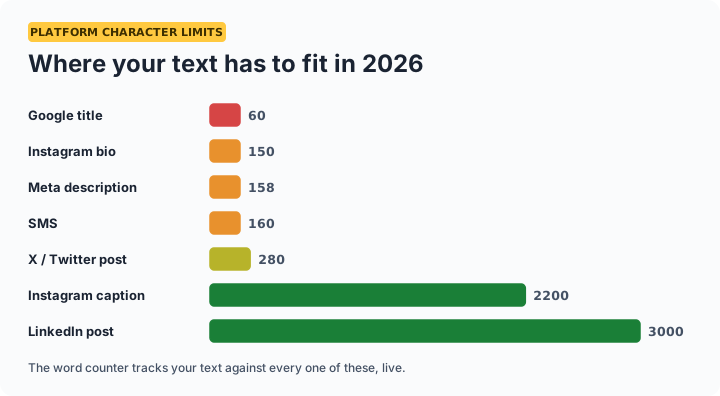
The limits that matter in 2026: X/Twitter post 280 characters · Instagram caption 2,200 (bio 150) · SMS 160 · Google title ~60 · Google meta description ~158 · LinkedIn post 3,000. The tracker below shows exactly where your text stands against each.
How reading and speaking time are calculated
Reading time uses 200 words per minute — the widely used average for adult silent reading of general content (technical material runs slower, skimming faster). Speaking pace averages about 130–150 wpm, so a 5-minute talk needs roughly 650–750 words, and a 10-minute YouTube script around 1,300–1,500. Sentences are counted by terminal punctuation and paragraphs by blank lines, matching how most editors and CMSs treat them.
Frequently asked questions
How many words is a 5-minute speech or YouTube video?
At a natural speaking pace of 130–150 words per minute, a 5-minute script is roughly 650–750 words and a 10-minute one about 1,300–1,500. Scripts read aloud faster than conversation, so aim for the lower end if you tend to rush.
Do spaces count as characters on Twitter/X and Instagram?
Yes — every platform limit counts spaces, punctuation, and emoji (emoji sometimes count as 2). This counter's 'characters' figure is the one platforms measure against; 'characters without spaces' is mainly used for translation and typesetting quotes.
What word count does Google prefer for blog posts?
There's no official target — Google has repeatedly said word count is not a ranking factor. Pages rank by how well they satisfy the query: sometimes 300 words wins, sometimes 3,000. Write to cover the topic, then stop.
Does the counter work with Hindi and other non-English text?
Yes — words are counted by whitespace separation and characters by length, which works across scripts, and the keyword list recognizes Devanagari. Reading-time averages are calibrated for English, so treat them as rough for other languages.