Fixed Deposit (FD) Calculator
Enter deposit amount, interest rate, and tenure — see the maturity value with quarterly compounding (the Indian bank standard), total interest earned, and the effective annual yield.
—
maturity value
—
interest earned
—
effective yield/yr
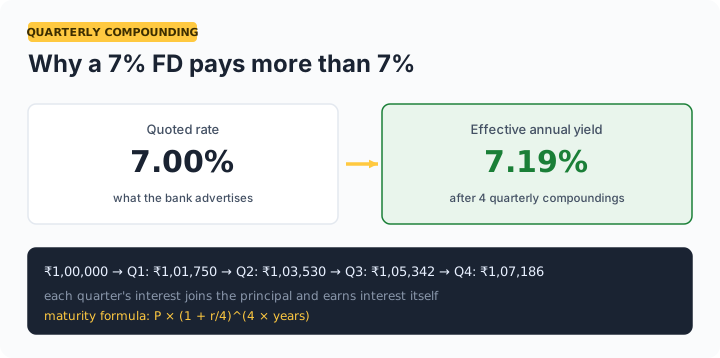
Why quarterly matters: Indian banks compound FD interest every quarter, so a "7% FD" actually yields about 7.19% annually — the quoted rate compounds on itself four times a year. Maturity = P × (1 + r/4)4t.
FD facts worth knowing before you book
| Fact | Detail |
|---|---|
| Quoted rate ≠ yield | Quarterly compounding makes a 7% FD yield ~7.19% effectively; banks sometimes advertise the bigger "annualised yield" number |
| Interest is fully taxable | Added to your income and taxed at your slab; banks deduct TDS above the annual interest threshold (submit 15G/15H if below taxable income) |
| Senior citizens get more | Most banks add 0.25–0.75% for depositors aged 60+ |
| Premature withdrawal penalty | Typically 0.5–1% cut from the applicable rate; laddering several smaller FDs avoids breaking one big one |
| Deposit insurance | DICGC insures up to ₹5 lakh per depositor per bank — principal plus interest combined |
Frequently asked questions
How do banks calculate FD interest in India?
Almost all Indian banks compound quarterly: interest is calculated every three months and added to the principal, so subsequent quarters earn interest on interest. That's why a 7% FD matures at slightly more than simple 7% per year — about 7.19% effective.
Is FD interest taxable?
Yes, fully — FD interest is added to your income and taxed at your slab rate. Banks deduct TDS once your interest across their branches crosses the annual threshold; if your total income is below the taxable limit, submit Form 15G (or 15H for seniors) to avoid TDS.
What happens if I break an FD early?
Banks pay interest for the period the money actually stayed, at the rate applicable to that period, usually minus a 0.5–1% penalty. If you might need funds midway, ladder your money across several smaller FDs so you only break one.
FD or SIP — which is better?
Different jobs. FDs give a guaranteed, known return and suit money you'll need at a fixed date or can't risk. Equity SIPs have historically returned more over 7+ years but fluctuate and can be down when you need the money. Emergency funds and near-term goals belong in FDs; long-term wealth building generally favors equity — compare both with our SIP calculator.
Results are mathematical estimates for information only — actual bank rates, taxes, and returns vary. This is not financial advice.