URL Slug Generator
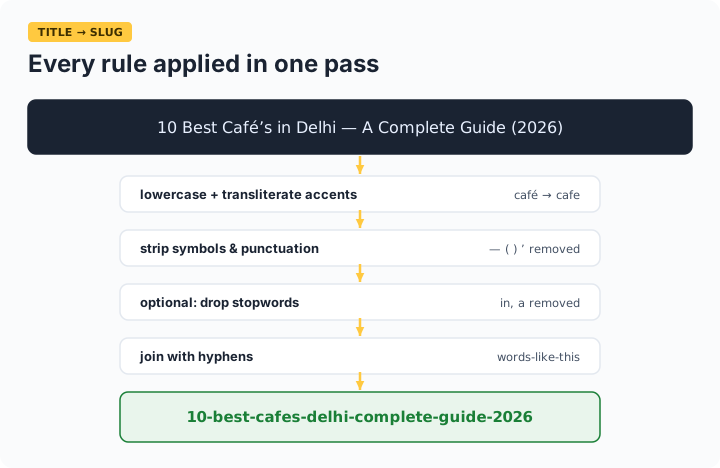
Paste a title — or a whole list, one per line — and get clean, SEO-friendly slugs: lowercase, hyphen-separated, accents converted, symbols stripped, with optional stopword removal and length capping.
What makes a good slug: lowercase (avoids duplicate-URL issues), hyphens between words (Google reads them as separators; underscores it doesn't), no dates or stopwords that add length without meaning, and short enough to survive being shared — under 60 characters is a good ceiling.
Slug rules that affect SEO
| Rule | Why |
|---|---|
| Hyphens, never underscores | Google treats hyphens as word separators; my-page is two words, my_page is one blob |
| All lowercase | Many servers treat /Page and /page as different URLs — a duplicate-content trap |
| No dates or years | /best-laptops-2024/ looks stale in 2026; evergreen slugs let you update content without changing the URL |
| Keep keywords, drop filler | 10-best-cafes-delhi beats 10-of-the-best-cafes-in-delhi — same meaning, cleaner |
| Never change a live slug casually | Changing a URL loses its accumulated equity unless you 301-redirect the old one |
Frequently asked questions
Should URL slugs use hyphens or underscores?
Hyphens, always. Google explicitly treats hyphens as word separators but not underscores — best-free-tools is read as three words while best_free_tools is read as one token. Hyphens are also easier to see in underlined links.
Should I include the year in a blog post slug?
Usually no. A dated slug like /seo-guide-2024/ looks stale the moment the year turns, and changing the slug later loses the URL's accumulated links unless you redirect. Keep the year in the title (easy to update) and out of the slug.
How long should a URL slug be?
Three to six meaningful words, ideally under 60 characters. Shorter slugs are easier to share, display fully in search results, and force you to keep only the actual keywords.
What happens to accents and special characters?
This tool transliterates common accented characters (café becomes cafe, ñ becomes n) and strips everything else that isn't a letter or number. That keeps slugs pure ASCII, which every server, browser, and sharing platform handles identically.