Text Case Converter
Paste text, click a case, copy the result. Nine conversions covering writing (Title Case, Sentence case) and code (camelCase, snake_case, kebab-case) — with live character and word counts.
0 characters · 0 words
Copied ✓Which case where? camelCase for JavaScript variables · PascalCase for classes and components · snake_case for Python and databases · kebab-case for URLs and CSS · Title Case for headlines · Sentence case for UI copy.
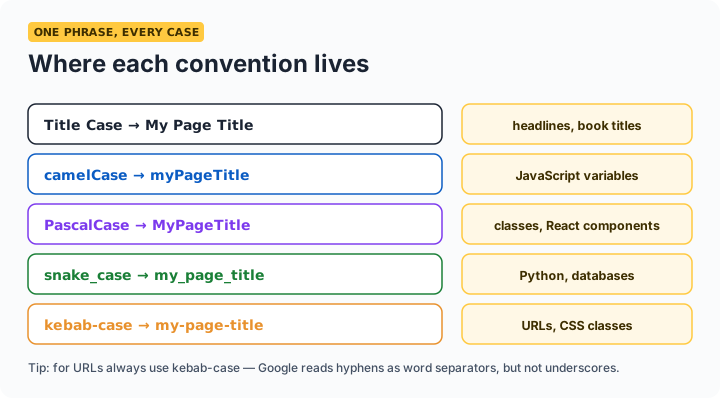
The programmer cases, decoded
Code cases exist because identifiers can't contain spaces. The converter also understands them as input: paste userFirstName and click snake_case to get user_first_name — camelCase boundaries are detected automatically, which makes this a quick variable-renaming helper when moving between JavaScript and Python codebases. Title Case follows headline style: minor words (a, the, of, and…) stay lowercase unless they start the text.
Frequently asked questions
What's the difference between Title Case and Sentence case?
Title Case Capitalizes Every Major Word (headlines, book titles) while keeping minor words like 'a', 'the', and 'of' lowercase. Sentence case only capitalizes the first word and after sentence-ending punctuation — the style most UIs and modern websites use.
Can it convert camelCase to snake_case?
Yes — the converter detects camelCase word boundaries in the input, so userFirstName converts cleanly to user_first_name or user-first-name. Handy when porting code between JavaScript and Python conventions.
Which case should I use for URLs?
kebab-case (lowercase-with-hyphens). Google treats hyphens as word separators but not underscores, and uppercase letters in URLs cause duplicate-content headaches since many servers treat /Page and /page as different URLs.
Does the tool change anything besides letter case?
Only for the code cases: camelCase, PascalCase, snake_case, and kebab-case also replace spaces with the appropriate separator. UPPERCASE, lowercase, Title Case, and Sentence case leave your spacing and punctuation untouched.