SIP Calculator
Enter a monthly investment, expected annual return, and duration — see the projected corpus split into what you invested versus what compounding added, with a year-by-year growth table.
—
you invest
—
wealth gained
—
projected corpus
The math: a SIP compounds every instalment for its own remaining time, so early months work hardest. Future value = P × ((1+i)n − 1) / i × (1+i), with i the monthly rate. The result is a projection at a constant return — real market returns vary year to year.
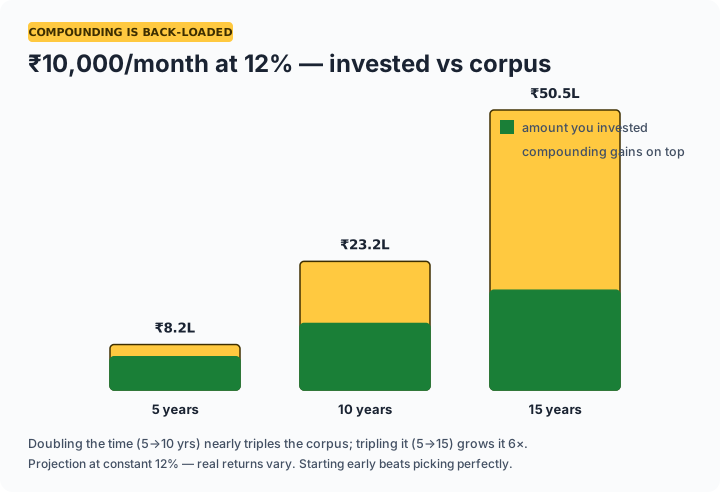
Why the last years dominate
Compounding is back-loaded: at 12% annual return, a ₹10,000 monthly SIP crosses its own invested amount around year 9–10, and roughly a third of the final 15-year corpus appears in the last 3–4 years. Two practical consequences: starting 5 years earlier matters more than picking a slightly better fund, and stopping a SIP in a market dip sacrifices exactly the phase where past instalments were about to work hardest. The projection assumes a constant return — real equity returns swing widely year to year and 12% is a common long-term assumption, not a promise.
Frequently asked questions
What return should I assume for a SIP projection?
Common planning assumptions: 10–12% for diversified equity funds over 10+ years (based on long-run Indian market history), 7–8% for hybrid/debt-heavy portfolios. These are assumptions, not guarantees — real returns vary widely, so also check the projection at a conservative 8–10%.
Does a SIP guarantee these returns?
No. A SIP is a way of investing (fixed amount, fixed interval), not a product with a fixed return. The calculator shows what a constant return would produce; actual mutual fund returns fluctuate. What SIPs do reliably is average your purchase cost across market ups and downs.
Is it better to invest monthly (SIP) or one lump sum?
Mathematically, a lump sum invested early beats a SIP in a steadily rising market, because more money compounds longer. Practically, most people have monthly income, not lump sums — and SIPs remove the temptation to time the market. If you receive a windfall, investing it promptly usually beats drip-feeding it.
What happens if I pause or stop my SIP?
Your existing units stay invested and keep compounding — you just stop adding. There's no penalty in most funds. But pausing during market falls means skipping the cheapest purchases, which is exactly when SIP instalments buy the most units.
Results are mathematical estimates for information only — actual bank rates, taxes, and returns vary. This is not financial advice.