EMI Calculator
Enter loan amount, interest rate, and tenure — see your monthly EMI, total interest, and total repayment instantly, with a year-by-year balance table. Works for home, car, personal, and education loans.
—
monthly EMI
—
total interest
—
total payment
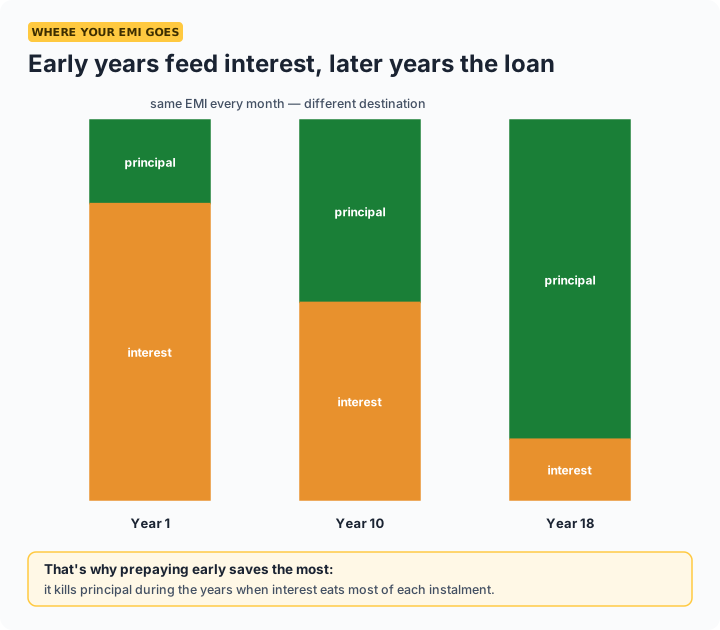
The formula: EMI = P × r × (1+r)n / ((1+r)n − 1), where P is principal, r the monthly rate (annual ÷ 12 ÷ 100), and n the number of months. Early EMIs are mostly interest; the principal share grows each month.
What actually reduces your interest burden
| Lever | Effect (₹25 lakh @ 8.5%) |
|---|---|
| Shorter tenure: 20 → 15 years | EMI rises ~13%, but total interest drops by roughly ₹7.7 lakh |
| Rate: 8.5% → 8.0% (refinance/negotiate) | Saves roughly ₹1.9 lakh over 20 years at the same tenure |
| One extra EMI per year as prepayment | Typically cuts 2–4 years off a 20-year loan |
Tenure is the biggest lever: doubling tenure doesn't halve the pain, it multiplies the interest. In the early years most of each EMI is interest — the year-by-year table above shows exactly when the balance starts falling fast, which is also when prepayments help least. Prepay early if you can; floating-rate home loans in India carry no prepayment penalty.
Frequently asked questions
Why is my EMI mostly interest in the first years?
Interest is charged on the outstanding balance, which is largest at the start. On a 20-year loan, early EMIs can be 70–80% interest; the split flips in later years as the balance shrinks. This is also why prepaying early saves far more than prepaying late.
Does making a prepayment reduce my EMI or my tenure?
Banks offer both options — reducing tenure saves dramatically more interest than reducing EMI, because it cuts the high-interest early years. Unless you need the monthly relief, choose tenure reduction. Floating-rate home loans in India have no prepayment penalty for individuals.
How much loan can I get for a given EMI?
Lenders typically cap total EMIs at 40–50% of monthly take-home income. Work backwards in the calculator: set the rate and tenure, then adjust the loan amount until the EMI matches what you can afford.
Is the EMI the same every month even with a floating rate?
With floating rates, banks usually keep the EMI fixed and adjust the tenure when rates change — so a rate hike silently extends your loan. Check your outstanding tenure after every rate change, and consider raising the EMI to hold tenure steady.
Results are mathematical estimates for information only — actual bank rates, taxes, and returns vary. This is not financial advice.